HomeHardware
Built beyond the screen
Code that moves.
Ideas you can touch.
Four builds, one thread of curiosity: bringing software, physical mechanisms, and everyday needs together.
01 · Assistive technology · Team project
Sparsho.
Information, felt.
A low-cost refreshable Braille display connecting a tactile mechanism, embedded firmware, and an Android companion.
Typing, spoken questions, and scanned pages all lead to the same destination: text that can be read through Braille cells. The phone prepares the content; the microcontroller handles the physical display.
The phone
Type text, ask a question, or scan a page. The Android app prepares and pages the content.
The microcontroller
AVR firmware handles serial communication, Braille encoding, and motor positioning.
The tactile display
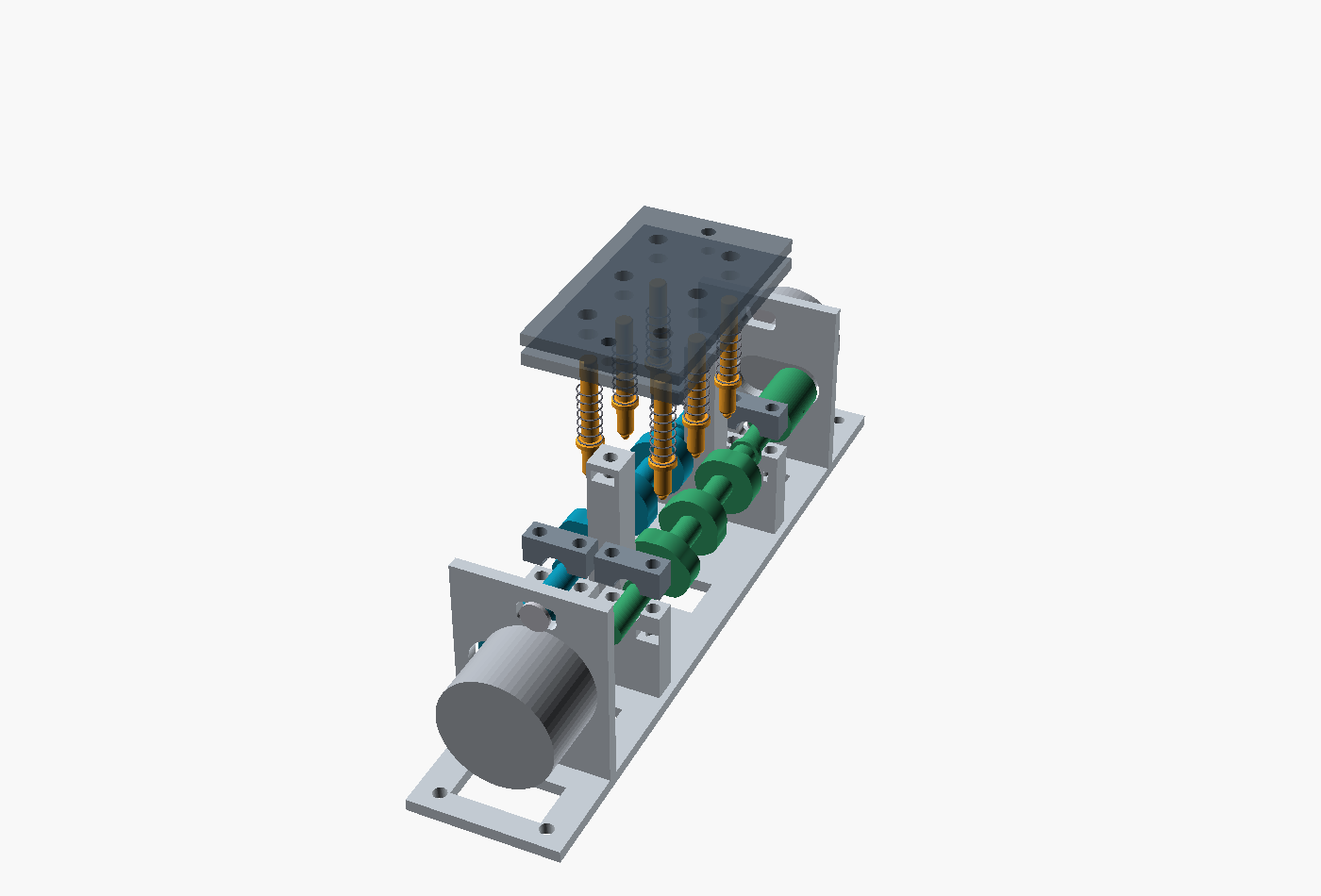
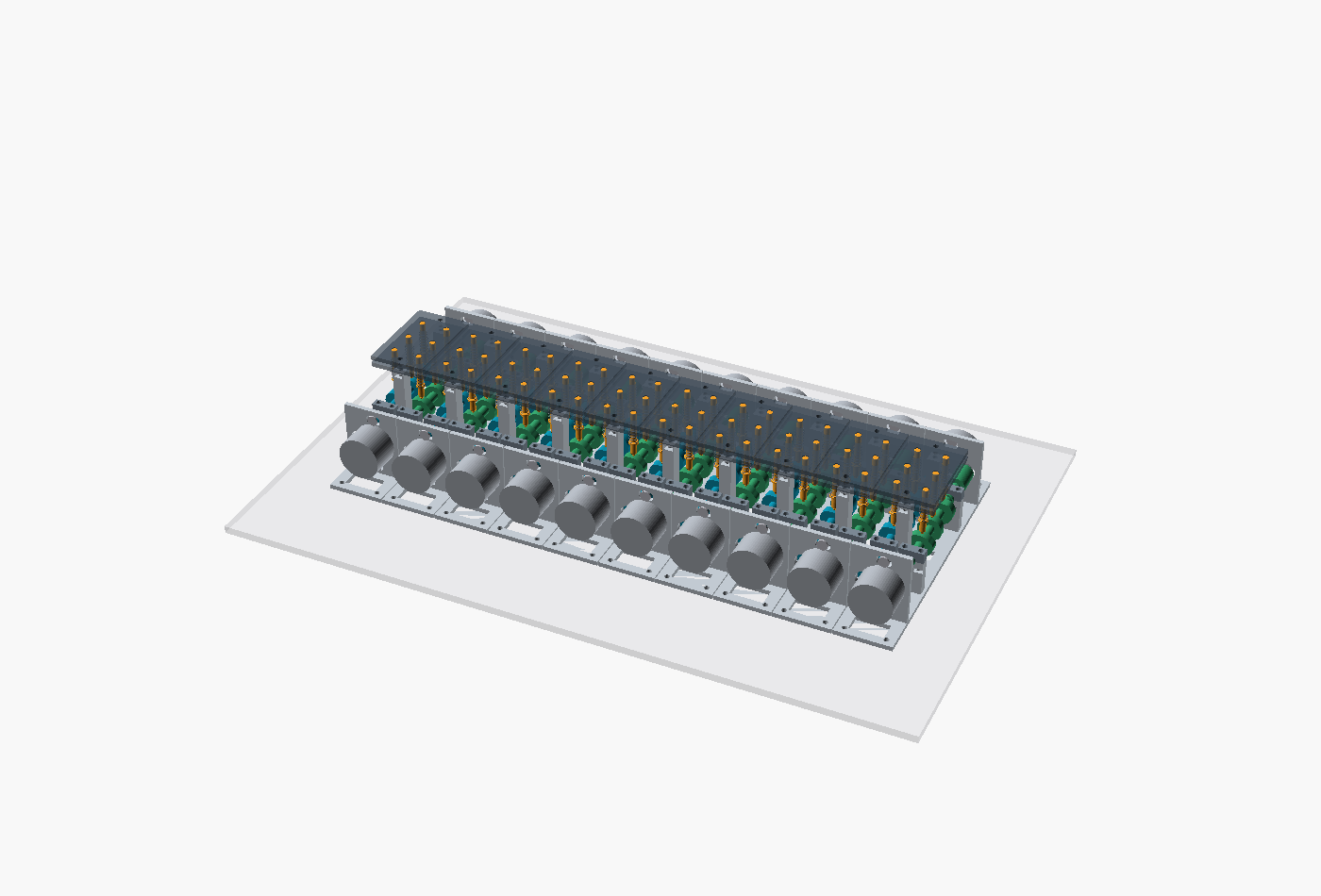
Cam-driven pins form the Braille patterns on a refreshable reading surface.
Built as a team
A shared engineering puzzle.
- Rafsan Jani Bin Islam
- Gazi Faiyaz Jafor Niloy
- Abdullah Al Mamun Tanvir
The development archive includes single-cell and multi-cell firmware iterations and the mechanical design studies shown here.
Explore the Android app02 · Medical Dispenser System · Hardware build
A useful routine.
A physical solution.
A hardware project centred on dispensing medicine through a physical device.
This project took my work from screen-based interactions into a dispensing workflow: thinking about how a physical action happens, how a person follows the process, and how a device can respond to an everyday need.
- PROJECT
- Medical Dispenser System
- FOCUS
- Physical dispensing & interaction
- DISCIPLINE
- Hardware development
03 · Smart farming · NASA Space Apps Challenge 2024
Agrologer.
Listening to the soil.
A field device that reads the soil, a set of servers that make sense of it, and a mobile app that turns it into decisions a farmer can act on.
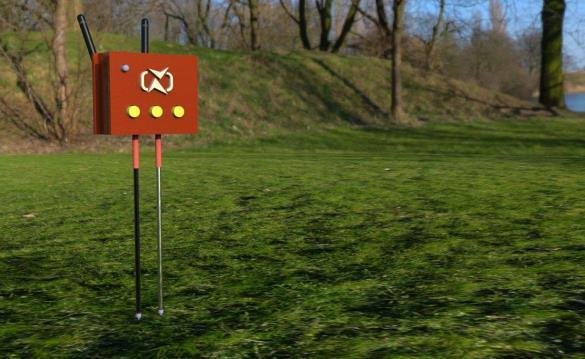
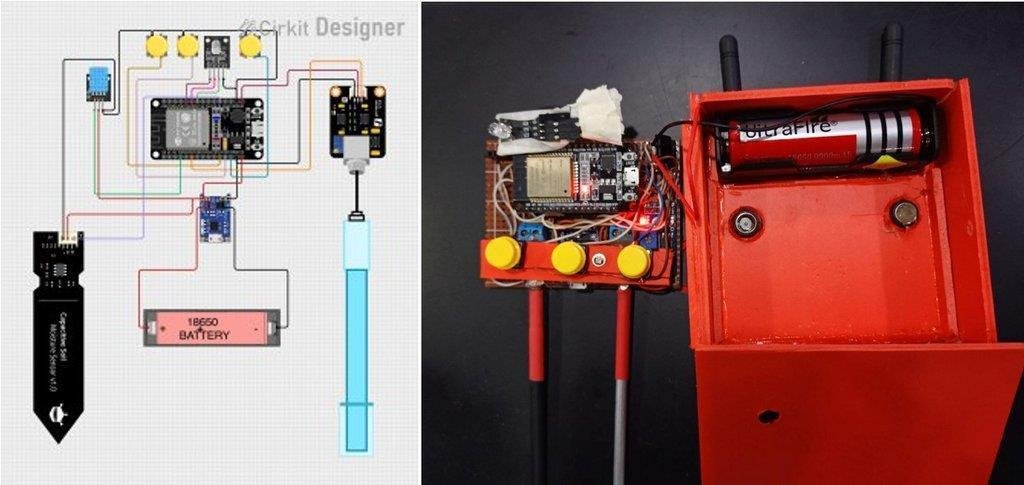
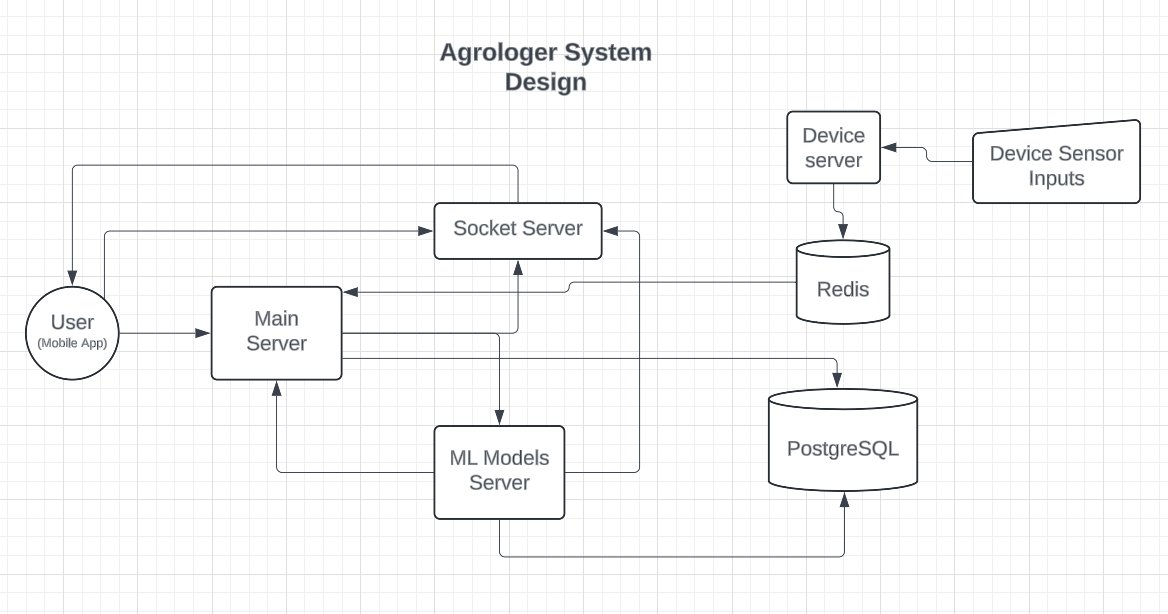
The Agrolyzer device goes into the ground with probes for soil moisture and pH, plus a temperature-and-humidity sensor, all on an ESP32 with its own battery. It sends readings over Wi-Fi to our servers, where machine-learning models trained with NASA data estimate drought, flood, groundwater and weather risks. The app brings it together: live field conditions, predictions, irrigation help, nearby services and a farmer community.
In the field
Soil-moisture and pH probes plus a DHT11 read the ground and the air. An ESP32 on an 18650 battery handles it all.
On the servers
A Node.js server and a socket server take in live readings; a Python service runs models for drought, flood, groundwater and weather.
In the farmer’s hand
The app shows field conditions, pests and soil health, predictions and to-dos — in a form that’s quick to act on.
NASA Space Apps Challenge 2024
2nd in the Khulna region. Globally selected.
- Field device + mobile app
- Real-time readings over Wi-Fi
- ML predictions built with NASA data
Built as a team for NASA’s global hackathon.
See the award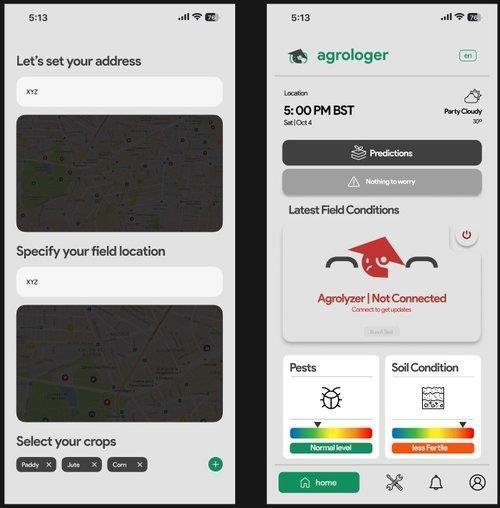
04 · Clean energy · Global 2nd, ISETS–ESCAP 2025
EcoChar.
From pest to power.
Water hyacinth chokes Bangladesh’s waterways. EcoChar turns it into hydrochar — a clean solid fuel — through hydrothermal carbonisation, with natural fertiliser as a by-product.
I was the team’s Chief Technical Officer. The plan pairs an HTC processing unit with AI across collection, transport, the supply chain and plant optimisation, and sells hydrochar to small and medium biofuel companies. We started in 2024 with industrial visits, conversations with experts and local communities, and pilot programmes at BUET.
- PROCESS
- Hydrothermal carbonisation
- INPUT
- Invasive water hyacinth
- OUTPUT
- Hydrochar + fertiliser
Clear the water
Hyacinth is cleared from waterways with local farmers — an extra income for them — with AI planning collection and transport.
The HTC unit
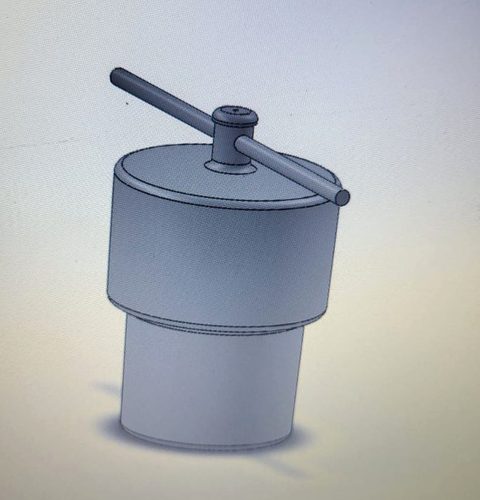
A reactor vessel, heating system, pumps and valves carry out hydrothermal carbonisation, turning wet biomass into hydrochar.
Power & soil
Hydrochar goes to biofuel companies as affordable renewable energy; the by-product goes back to the soil as fertiliser.
Good things start with a conversation
Curious about the builds?
Let’s talk hardware.
A project to build, something to learn, or just a hello. I’d love to hear from you.